


Is Tallow Skin Care Safe for Your Face? Benefits vs. Risks

Is beef tallow safe for your face? You can safely use melted animal fat as a thick body lotion that traps moisture. However, putting heavy fat on delicate facial skin creates real risks like blocked pores, pimple breakouts, and worse skin problems. Unregulated natural beauty trends drive the sudden rise of tallow skin care in modern beauty culture. Social media ads often claim that animal fats match human skin oils perfectly. Tallow contains natural fatty acids that might help hydrate your skin, but current skin science shows a major lack of tested studies on human faces. You must check the safety carefully before putting raw tallow on your skin.
Key Takeaways
-
Beef tallow traps water to help calm extremely dry skin and eczema.
-
Thick animal fats can block dead skin cells and lead to acne breakouts.
-
People who have oily skin or frequent breakouts should not use pure tallow.
-
Skin doctors suggest light plant-based oils and ceramides to keep your face safely moisturized every day.
What Is Tallow Skincare?
You may ask what tallow skincare means. Tallow comes from cooked animal fat that makers process for your skin. People clean this fat to make a thick lotion for daily use. Old-style lotion makers used animal fats long before human-made options were created.
Composition and Lipid Profile of Tallow
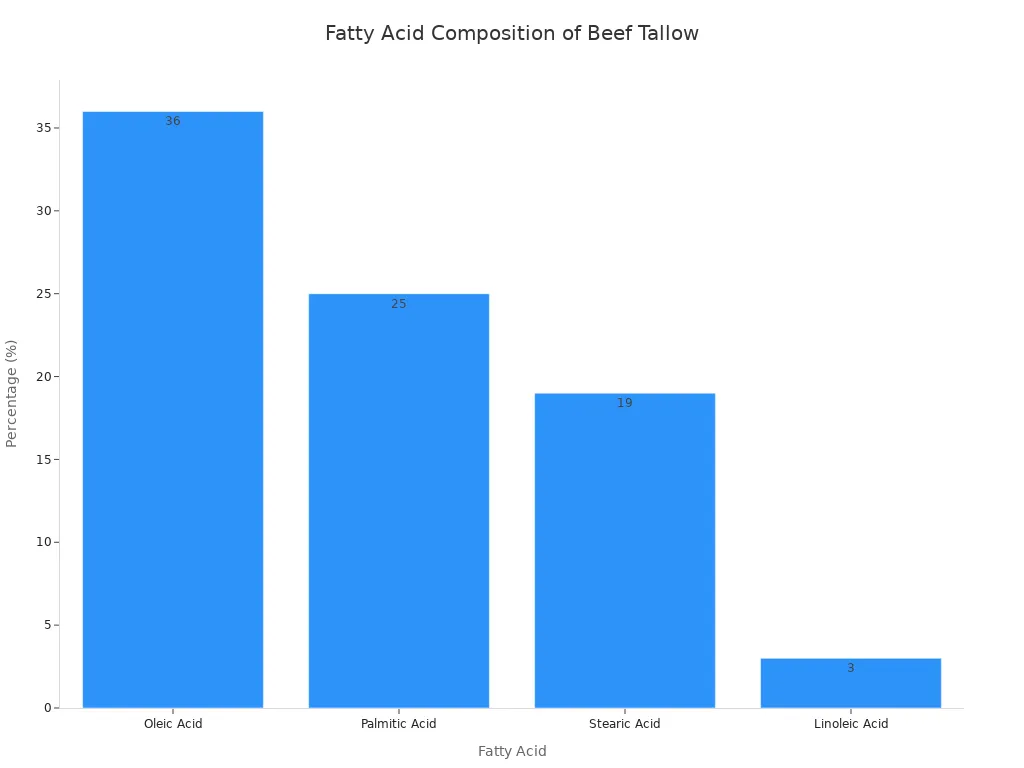
Melted beef fat has rich fatty acids that feed your outer skin layer. It contains key moisturizing fats like oleic, palmitic, stearic, and linoleic acids.
|
Fatty Acid |
Percentage in Beef Tallow |
|---|---|
|
Oleic Acid |
36% |
|
Palmitic Acid |
25% |
|
Stearic Acid |
19% |
|
Linoleic Acid |
3% |
Beef fat also offers important fat-soluble vitamins to your top skin layer. These nutrients help your body cells work correctly and stay healthy.
|
Vitamin |
Concentration (per 100g) |
|---|---|
|
Vitamin D |
36 IU (yellow sample) / 19 IU (white sample) |
|
Vitamin A (as Retinol) |
328 IU (white sample) / 308 IU (yellow sample) |
|
Vitamin E (alpha-tocopherol) |
2.7 mg |
|
Vitamin K1 |
0.14 mcg/g |
|
Vitamin K2 (as MK4) |
0.13 mcg/g |
Biocompatibility with Human Sebum
Fans say animal fat acts just like human body oil. Your skin creates sebum on its own to stay smooth and soft. Sebum holds triglycerides and free fatty acids inside it. Processed animal fat contains these same basic fats. You get an almost equal mix between animal fat and natural human oil.
Still, new skin science reviews show clear drawbacks to these matches. Scientists point out a big shortage of real human tests. These clinical studies do not show that tallow absorbs faster or moisturizes better than regular plant oils.
Companies sell tallow as a clean beauty option for everyday use. The beauty market uses selling words like "natural" or "clean." Federal regulators do not check these words on store products. You must judge all skincare items by real medical facts instead of fancy claims.
Facial Tallow Skin Care Benefits

Using animal fats in your routine offers several helpful benefits for your daily cosmetic care. Traditional tallow provides rich natural fats that help protect your outer skin barrier. Learning about these specific components helps you understand how animal fats work on your face. You can easily make smart choices for your routine by reviewing these facts.
Moisture Barrier Repair and Hydration
Applying animal fat strengthens the outer layer of your face against harsh daily weather. You can apply beef tallow as a heavy lotion to protect against environmental damage. These natural fats effectively seal in essential moisture. Skin experts continue to study how natural fats restore outer health. A 2024 study on 78 people tested a cream made with tallow. The report showed that this mix boosts hydration and hydrates well. People used the cream on dry issues like eczema and psoriasis. The results prove it calms dry patches across various body areas.
You can compare beef tallow to petroleum jelly to see how both products stop moisture loss.
|
Aspect |
Tallow |
Petroleum Jelly |
|---|---|---|
|
Primary Action |
Integrates into the lipid matrix to restore the barrier. |
Sits on the surface, forming an occlusive layer. |
|
Mechanism for Reducing TEWL |
Contains fatty acids that resemble human tissue, helping to repair the barrier, which inherently reduces water loss. |
Creates a water-resistant, occlusive seal that physically blocks moisture evaporation. |
|
Result with Consistent Use |
Reduced trans-epidermal water loss due to improved barrier integrity. |
Reduced transepidermal water loss due to surface-level occlusion. |
Putting tallow on your face helps trap extra moisture while you sleep. These thick fats belong to a group of powerful moisturizing products. People with dry skin feel quick relief after smoothing it on. Using beef tallow forms a heavy protective shield against cold air. Your skin needs these protective fats during chilly winter months. Regular use stops natural water loss throughout the entire day. Your face stays much softer through harsh seasonal weather changes. Keep in mind that these beef tallow skincare products are held to the same regulatory standards that commercial products are. They can go rancid and smell 'beefy' by nature unless heavily perfumed, another potential allergen,
Nutrient Delivery to Keratinocytes
You feed essential nutrients directly to your skin cells using animal fats. Keratinocytes build the main structure of your outer skin layer. These crucial cells need extra fats for constant repair and growth. Beef tallow sends helpful vitamins straight to these key areas. You nourish your outer skin with simple natural blocks every day.
Using tallow supplies your face with important vitamins A, D, E, and K. These helpful nutrients aid quick healing in damaged areas. Researchers study the healing benefits of tallow for soothing red eczema. Skin doctors notice these positive effects during regular medical tests. The essential fats speed up natural healing without artificial ingredients. You receive real moisturizing power while feeding rich nutrients to your face. Healthy cells use these natural fats to strengthen outer bonds. Stronger cell bonds create a smoother skin texture over time. You keep your skin healthy through proper nutrient absorption. Daily nourishment protects your delicate face from common environmental stress.
Risks and Side Effects of Facial Tallow
Putting animal fats on your face has clear dangers that you should consider carefully. Current skin care studies show big differences in how people process raw animal fats. Government groups do not test these raw fat creams like medical cures. Because of this, beef tallow lacks official FDA approval for health care, and it gives you no sun protection against harmful rays. Unchecked heating methods can lead to harmful bacteria growth in products. Every batch of animal fat cream lacks standard safety checks unless companies test it carefully. Store-bought fats often change between brands because farms feed their animals different food. These varying diets change the exact amount of healthy fat in each jar.
Comedogenicity and Breakouts from Tallow
Many people fear getting pimples when using raw fats on their face. You need to learn how different fats affect your small pores. Skin care experts rate fat safety using a basic pore-clogging scale from 0 to 5.
|
Factor |
Grass-fed Beef Tallow |
Coconut Oil |
|---|---|---|
|
Comedogenic Rating |
1-2 / 5 (low) |
4 / 5 (high) |
|
Primary Reason |
Contains oleic and palmitic acids, similar to skin's own sebum. |
High lauric acid content forms a thick, occlusive layer that clogs pores. |
|
Effect on Pores |
Unlikely to clog pores. |
Highly likely to clog pores and cause breakouts, especially for acne-prone skin. |
Beef tallow's rating of 2 places it in the 'generally considered non-comedogenic' category.
A level 2 score means processed fat usually will not block pores for most people, even those with easily hurt skin. Still, thick sealing fats can hold dead cells against oily skin. Anyone who gets deep pimples must be extra careful before spreading heavy fat creams over their face. You should always watch how your face responds.
Aggravation of Existing Skin Conditions
Putting on thick fat layers can affect long-term facial health problems. You need to learn how pure fat blends change hidden issues before updating your daily face routine.
-
Purified animal fat usually does not trigger rosacea, and it can actually help calm it down.
-
Extra skin redness from pure animal fat happens rarely; if it occurs, plant additions or strong scented oils are likely to blame.
-
Natural fat mixes help your face mostly by fixing its outer shield without causing painful swelling.
-
People with rosacea should pick plain, fragrance-free fats and avoid plant oils that irritate delicate skin.
-
Your face might feel extra greasy or break out briefly, but this temporary phase happens while natural oils rebalance.
Using raw tallow on skin can sometimes trap body heat under your top skin layer. Trapped warmth can cause extra itching for people dealing with severe skin redness. Also, heavy animal fats can disrupt the healthy balance of tiny organisms living on your face. You can talk with a skin doctor to pick safer creams for tricky skin problems. Learning from real skin research helps you decide if tallow on skin fits into a healthy daily care plan.
Is Tallow Safe for Your Skin Type?
Suitable Candidates for Tallow Use
You can check tallow skincare options based on your personal needs. Tallow balm hydrates deeply, speeds healing, and protects the barrier on all skin types. People with severe dry skin, eczema, or sensitive faces often get great moisturizing results from using natural animal fats.
|
Target User |
Primary Skin Benefit |
Key Outcome |
|---|---|---|
|
Dry Skin |
Restores missing surface lipids |
Deep moisture retention |
|
Sensitive Skin |
Soothes irritation and redness |
Stronger barrier protection |
Putting tallow on your face replaces lost surface fats fast. People dealing with dry patches or eczema feel quick comfort after putting on a small amount. These rich fats boost skin health by calming redness and aiding natural recovery. Dermatology studies show these thick fats build up weak skin shields during cold winter months. Using pure beef tallow often makes your skin feel smooth over time.
High-Risk Skin Types That Should Avoid It
You need to take care before putting beef tallow on delicate facial skin. Heavy animal fats can trap body heat, so people with active rosacea should test items first. You ought to avoid using beef tallow if you have any of these specific problems:
-
Active, severe cystic acne
-
Very oily skin year-round
-
Fungal acne caused by Malassezia yeast
-
Verified beef protein allergy
Teens with normal skin already make plenty of natural oils. Adding extra fat can trap bad bacteria inside small pores. Fungal acne grows fast on animal fats, which makes your pimples worse. Anyone with a beef protein allergy might suffer bad reactions from unrefined fat. Medical studies show these high-risk groups need lighter oil formulas to avoid painful spots. Putting raw tallow on active fungal acne ruins your skin's natural balance. You stay safer by choosing light products that do not clog pores. Furthermore, consider what the source and processing for this beef tallow is.
See Dr. Dray's video here: https://youtu.be/xvx9yBjxkjs?si=gpUKukCy8FO21u5y
Dermatologist-Approved Skincare Alternatives
Plant Oils and Squalane
You can improve your daily routine by choosing safe plant items instead of thick animal fats. Many plant extracts have light textures that feed your skin without blocking pores. Skin doctors usually suggest natural plant oils high in linoleic acid to balance your oils. For example, a doctor review spotlights products like Youth To The People Superberry Hydrate + Glow Dream Face Oil. This gentle mix uses sweet almond oil and vitamin E to repair your skin barrier.
Plant fats offer different antioxidants that help your top skin layer heal over time. In addition, jojoba oil acts like a liquid wax that matches your natural body oil. Squalane also provides light moisture without causing pimples on delicate skin. Unlike heavy tallow, well-made plant oils let you easily adjust care for oily or acne-prone skin.
|
Plant Oil |
Comedogenic Rating |
|---|---|
|
Hemp Seed Oil |
0 |
|
Argan Oil |
0 |
|
Rosehip Seed Oil |
1 |
|
Jojoba Oil |
2 |
|
Sweet Almond Oil |
2 |
Bioidentical Ceramides and Hyaluronic Acid
You can fix damaged skin barriers well by picking modern ingredients tested by skin doctors. Matching ceramides, like Ceramides NP, copy the natural fats made by your own body. Makers extract these pure fat structures from plant sources such as wheat, sunflower oil, or shea butter. They strengthen cell connections while speeding up natural healing across dry patches.
Mixing matching ceramides with strong water-binding ingredients gives deep moisture directly to your skin cells. Hyaluronic acid pulls water from the air to plump up your skin safely. Modern hydrating creams blend these two parts together to hold moisture all day long. Using a hydrating moisturizer builds up your skin shield while keeping your face very smooth. Skin experts prefer new skincare formulas over raw animal fat because they work better. Medical research proves these products offer reliable barrier protection for all skin types.
Skin doctors share a clear agreement on using beef fat. Rich tallow provides heavy moisture and protects your face, yet high pore-blocking risks make it bad for daily routines. Simple natural options never guarantee safety across every skin type.
If you try tallow products, perform quick spot tests on your inner arm first. Pick pure, top-quality items to help your face heal properly. Fresh skin care routines must value real safety and proven results above all. Smart science tests guide modern lotion recipes for consumers today. Selecting clear, non-clogging products backed by real research protects your delicate skin long term.
Is beef tallow well researched by dermatologists?
Is beef tallow well researched?
No, it is not.
Is beef tallow safe for daily facial skincare routines?
Beef tallow works well as a thick moisturizing layer for your skin. Even so, clear human research tests are missing to prove its daily facial use. These heavy fat products can lock in extra oil and block your pores easily.
How does applying tallow on skin help dry areas?
Spreading tallow over your face builds a helpful barrier that stops weather damage. These natural fats work to lock in moisture over time. They form a brief hydrating shield to soothe very dry patches.
Can thick animal fat clog your facial pores?
Thick animal fat creams carry a real chance of blocking tiny facial pores. Although animal fats look like human skin oil, heavy creams trap dead skin cells. People with oily or pimple-prone skin frequently break out from these rich formulas.
Are plant alternatives better for a hydrating skincare routine?
Skin doctors usually suggest using squalane or matching ceramides for daily moisture. These standard skincare options provide lightweight choices that do not clog pores, and real human studies fully support them.