


Trauma PTSD facts everyone should know right now

My Personal Experience
My goal is to help you, dear reader, to understand how to recognize and cope with PTSD in yourself, or a loved one, then what you can do about it.
I was a critical care/trauma nurse in the late 1970's. Inner-city, university based hospital where horrors abounded daily. I was young and ill prepared for what I saw and experienced, almost continuously. My colleagues thought I was calm; I was not. I was shut-down and paralyzed by the chaos around me. When I wasn't at work, I slept. That was my life and I didn't recognize what was wrong with me, In fact, I didn't think anything was wrong.
The term, PTSD didn't even exist in those days. But now, I recognize that, in the words of Bessel van der Kolk, The Body Keeps The Score. My pre-frontal cortex, or rational brain, was offline most of the time and I experienced what most people with PTSD know. There are no words to describe our experiences, because trauma bypasses our language center, but our poor bodies feel the terror.
Then, in March of 2005, I met Paul, a gentle giant of a man with piercing blue eyes and what I believed at the time to be an unparalleled calmness of personality. Oops, was I mistaken. He was a survivor of the Vietnam War, who outran PTSD until he was 50, then the war and multiple traumas, came for him. It probably started in his mid-teens with the loss of his father, the war, a traumatic marriage, two heart attacks, heart surgery, and a marital suicide.
Between the two of us, it was nothing short of a miracle that our relationships lasted for twenty years, but our mutual devotion to one another held us together, in spite of our histories. But, we learned that trauma takes prisoners, and that we had to learn how to cope with what had been taken from us; tenderness, attachment and understanding. Tuffie was the glue that held us together. Read more here.
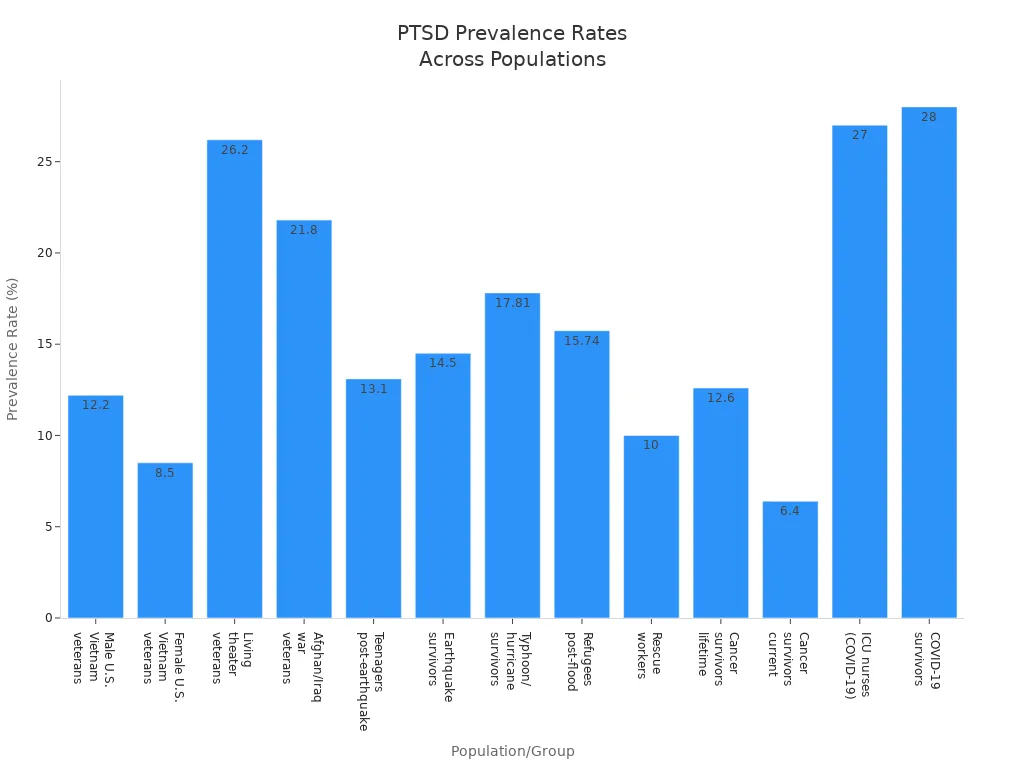
You might know someone who struggles after a traumatic event, but you may not realize how common PTSD is. PTSD is a real mental health condition that can affect anyone, including people who survived disasters or fought in wars. The need for awareness is urgent—rates reach 27% in ICU nurses and 28% in COVID-19 survivors. Take a look at how PTSD impacts different groups:
If you or someone you care about faces trauma PTSD, you can find help and learn more from experts like Bessel van der Kolk or search https://www.google.com/search?q=bessel+van+der+kol.
Key Takeaways
PTSD is a common mental health problem. It can happen to anyone after trauma. It is important to know about PTSD. Many people do not know they or someone they know has it.
Trauma can be narrow or broad. It affects people in different ways. Knowing the type of trauma helps us see its effects.
PTSD symptoms are flashbacks, avoiding things, bad thoughts, and being very alert. Seeing these signs is important to get help.
Friends and family support is very important for recovery. Making a safe place and good habits can really help someone with PTSD.
Professional help like therapy and medicine works well for PTSD. Getting help shows strength and can help people get better.
Trauma and PTSD Basics
What is Trauma?
People use the word trauma a lot. In mental health, it means something different. Trauma happens when something is too much for you to handle. Some things happen fast and surprise you. Other things build up slowly. Experts talk about trauma in two main ways:
Type of Trauma |
Description |
|---|---|
One event is so strong it makes you feel scared or want to stay away. |
|
Broad Trauma |
Any event or situation that makes you feel bad, no matter how big or small. |
There are many ways you can go through trauma. The table below shows common types:
Type of Traumatic Event |
Description |
|---|---|
Direct exposure |
You go through the event yourself. |
Witnessing |
You see something happen to someone else. |
Learning |
You find out someone close to you had something bad happen. |
Indirect exposure |
You hear about trauma at work, like first responders do. |
Examples |
War, physical assault, terrorist attacks, natural disasters. |
What is PTSD?
Post-traumatic stress disorder is a mental health problem. It can happen after you go through or see trauma. Not everyone who faces trauma gets PTSD. Some people do. Doctors look for certain signs:
You remember the trauma a lot, or have nightmares or flashbacks.
You stay away from things that remind you of the event.
You feel more upset or have trouble thinking clearly.
You feel jumpy, angry, or can't sleep well.
These signs last over a month and make life harder.
How Trauma Leads to PTSD
Trauma can happen to anyone. This includes kids, veterans, and people who survive violence or disasters. If you have been through trauma before, you might be more likely to get PTSD. Your risk depends on your support system, your genes, and how you deal with stress. Sometimes, PTSD signs show up right after trauma. Other times, they come months or years later. Having people to help you can lower your risk. Trauma PTSD does not mean you are weak. Getting help early can help you get better.
Key Facts About Post-Traumatic Stress Disorder
Prevalence and Risk Factors
You might ask how often trauma ptsd happens. About 6 out of 100 people will have ptsd in their lives. This means you probably know someone with ptsd, even if they do not talk about it. Some groups have a bigger chance of getting it. Women are more likely to get post-traumatic stress disorder than men. The lifetime rate is about 5.2% for females and 1.8% for males. Some groups have more risk, like:
Racial and ethnic minorities, such as U.S. Latinx, African Americans, and American Indians
People with less money or resources
People who have had trauma before
Women and girls
You can have a higher risk if you do not have much support, have faced trauma before, or have other mental health problems. Kids, veterans, and people who survive violence or disasters often have more trauma ptsd.
Common Causes of PTSD
Many things can cause ptsd. Some of the most common causes are:
Feeling your life is in danger or getting hurt
Violence from someone you trust or know
Physical, emotional, or sexual abuse
Fighting in wars
Terrorist attacks
Natural disasters like tornadoes, floods, earthquakes, or fires
Serious accidents, like car or plane crashes, if you see or go through them
Violent crimes, whether you see them or they happen to you
Kids can get ptsd after very bad events, especially if they do not have adults to help them. If you are close to the event, you may feel more upset. Girls are more likely than boys to get symptoms. If you have had more than one trauma, your risk goes up.
PTSD Symptoms
PTSD can change how you think, feel, and act. The signs usually fit into four main groups:
Symptom Cluster |
Description |
|---|---|
Re-experiencing |
You have memories, nightmares, or flashbacks about the trauma. |
Avoidance |
You stay away from places, people, or things that remind you of the trauma. |
Negative Cognition |
You have bad thoughts about yourself or others, feel guilt or hopeless, or stop liking things you used to enjoy. |
Hyperarousal |
You feel jumpy, get scared easily, cannot sleep, or feel angry. |
Kids under six may show trauma ptsd by playing in a different way or acting out, like being clingy or having stomach pain. Older kids and adults often have clearer signs, like nightmares or staying away from things that remind them of the trauma. Adults may also feel sad or have trouble sleeping.
Myths vs. Facts
You might hear things about ptsd that are not true. Some people think only soldiers get ptsd, or that it means you are weak. These ideas are wrong. Anyone can get trauma ptsd, no matter their age, gender, or background.
Knowing the facts about ptsd helps people feel less alone. When you know the truth, you can help others and tell them to get help.
Myths can make people feel bad or ashamed. They may stop you or someone you know from asking for help. Remember, ptsd is a real mental health problem. Getting help shows you are strong, not weak.
Impact and Treatment for PTSD
Effects on Daily Life
PTSD can change your daily life in many ways. You might have problems with friends, family, or at work. Many people with ptsd find it hard to trust others. You may feel numb or not want to talk about feelings. Sometimes, you pull away during fights or avoid being close. These problems can make it hard to stay close to people you care about.
69% of survivors have trouble with closeness.
61% say it is hard to trust others.
57% have less physical closeness and are less happy with it.
45% feel numb or far away during close times.
Hyper-arousal, or startle response to loud noises.
You might also have strong mood swings or feel angry. Some people feel numb or have moods that change fast. You may think badly about yourself or feel broken. Problems with others can hurt your life at home or work.
PTSD can also hurt your body. You have a higher chance of heart problems, like heart attacks or strokes. People with ptsd are 50% more likely to get diabetes. Pain that lasts a long time is also more common if you have trauma.
A study in the Journal of Family Psychology found ptsd makes it hard to talk about feelings, causes people to pull away during fights, and makes close moments harder.
It can be hard to get help for ptsd. You might not find a doctor, have trouble getting there, worry about money, or feel shame, especially if you live far from a city.
Diagnosis of PTSD
Doctors use special tests to find out if you have ptsd. You must have gone through trauma, either yourself or by seeing it happen. You need to have signs like being jumpy, staying away from things, having bad thoughts, and feeling sad or upset after trauma.
Instrument |
Contents and characteristics |
|---|---|
Clinician-administered PTSD scale for DSM-5 (CAPS-5) |
30 questions. Checks how often and how strong your signs are. It is the best test for ptsd. |
PTSD checklist for DSM-5 (PCL-5) |
20 questions you answer yourself. Uses a 5-point scale. A score of 33 or more means you might have ptsd. |
Post-traumatic stress Scale-14 (PTSS-14) |
14 questions. Checks how often you have signs on a 7-point scale. A score of 45 or more means you may have ptsd. |
The screen for posttraumatic stress symptoms (SPTSS) |
17 questions. Matches old ptsd rules. Uses an 11-point scale. |
International trauma questionnaire (ITQ) |
28 questions for ICD-11 ptsd and CPTSD. Checks if treatment is working. |
Doctors may also use tests for sadness or worry, since these often happen with ptsd.
PTSD Treatment Options
There are many ways to treat trauma ptsd. The best ways are trauma-focused therapy, exposure therapy, and some medicines. Cognitive Behavioral Therapy (CBT) is safe and works well for ptsd. It helps you change bad thoughts and actions. Exposure therapy helps you face memories and places linked to trauma in a safe way. This can help you feel less scared.
Prolonged Exposure (PE)
Cognitive Processing Therapy (CPT)
Eye Movement Desensitization and Reprocessing (EMDR)
Psychedelic-assisted treatments
Medicines like antidepressants and anxiolytics
Other therapies can also help lower ptsd signs. Medicines, especially SSRIs, can help with sadness and worry. But medicine alone often does not fix the main problem.
Treatment Method |
Efficacy |
Limitations |
|---|---|---|
Cognitive Behavioral Therapy (CBT) |
Safe and works well for ptsd; better results than other therapies |
Up to half of people may not get better; many stop going; does not always fix the main problem |
Medication |
Does not work as well; no big help when used with CBT |
Often does not fix the main problem; can have side effects |
You can use both therapy and medicine for the best results. Exposure therapy is important in many treatments. You may need to try different things to see what helps you most.
Recovery and Hope
You can get better after ptsd. With the right help, you can feel hope and become stronger. Hope helps protect you from ptsd signs and helps you heal after trauma. The Adult Dispositional Hope Scale checks hope by looking at your goals and how you reach them.
Support from others helps you feel less alone. It gives you ways to solve problems and share your feelings. When you join support groups, you learn your feelings are normal after trauma.
You can have a better life with ptsd treatment. You may need help from doctors, family, or friends. Getting better takes time, but you can move forward and learn new ways to cope. Remember, you are not alone. Many people have had trauma and found hope again.
Support and Seeking Help for Trauma PTSD
Supporting Someone with PTSD
You can make a big difference for someone who lives with trauma ptsd. Your support helps them feel safe and less alone. Here are some ways you can help:
Create a safe and calm space at home.
Learn about trauma and triggers so you can avoid causing distress.
Encourage healthy habits like mindfulness, journaling, or creative activities.
Be present and listen when they want to talk.
Offer comfort during tough moments, such as taking a walk together.
Suggest professional therapy, including cognitive-behavioral therapy or exposure therapy.
Stay informed about mental health and treatment options.
Join them in learning about PTSD to build a supportive environment.
Support groups give people a place to share their stories and find understanding. You can help your loved one find a support group, either online or in person.
When to Seek Professional Help
Sometimes, you may notice signs that show someone needs more than just support from friends or family. Watch for these signs:
They have trouble with daily life, like work or school.
They avoid people or places more often.
They talk about feeling hopeless or worthless.
They use drugs or alcohol to cope.
They have thoughts of self-harm or hurting others.
If you see these signs, encourage them to reach out for help. Remind them that seeking help is a sign of strength, not weakness.
Finding Resources
You do not have to face trauma ptsd alone. Many resources can guide you and your loved ones. The National Institute of Mental Health offers trusted information about PTSD, treatment, and ways to get help. You can also find local therapists, hotlines, and support groups. These resources help you learn more and connect with others who experience ptsd. Taking the first step to ask for help can lead to hope and healing.
You now know that trauma and PTSD are real and common. You can see that PTSD affects people of all ages and backgrounds. Treatment works, and recovery is possible. If you or someone you care about struggles, reach out for help. Support makes a difference.
Remember, hope and healing start with understanding. You are not alone.
FAQ
What is the difference between trauma and PTSD?
Trauma is an event that overwhelms you. PTSD is a mental health condition that can develop after trauma. Not everyone who experiences trauma will get PTSD.
Can children get PTSD?
Yes, children can get PTSD. They may show different signs than adults, like acting out, being clingy, or having trouble sleeping.
How long does PTSD last?
PTSD can last for months or years. Some people recover in a few months. Others need more time and support to heal.
Is PTSD only caused by war or violence?
No, PTSD can happen after many types of trauma. Accidents, natural disasters, abuse, or losing someone close can also cause PTSD.
Where can you find help for PTSD?
You can talk to a doctor, counselor, or mental health professional. The National Institute of Mental Health offers trusted information and resources for PTSD.