


Understanding Personal Care Product Best By and Expiration Dates

You find an old skincare bottle in your drawer and wonder if it’s still safe to use. Many people get confused by expiry dates, expiration dates, and best by dates on skincare products. It’s important to know when your skincare works best. Understanding expiry dates, expiration dates, and best by dates helps you use skincare and other personal care products safely.
Key Takeaways
Know the difference between 'best by' and 'expiration' dates. 'Best by' indicates when a product is at its best quality, while 'expiration' shows the last safe day to use it.
Products that contain water, generally have a shorter shelf life
Check for signs of expiration. Look for changes in color, smell, or texture. If a product smells bad or looks different, it's time to throw it away.
Store skincare products properly. Keep them in a cool, dark place to extend their shelf life and effectiveness.
Companies are responsible to conduct stability testing throughout the life-cycle of each product for consumer safety.
Fresh foods are different than personal care items, though no less important. Who wants to drink sour milk, or eat spoiled meat? Personal care items degrade, slowly over time; much more time than fresh food, or drugs.
Best By vs. Expiry Dates
What Are Best By Dates?
You might see a "best by" or "best before" date on your personal care products. This date tells you how long the product will stay at its best quality. Manufacturers use several ways to show this information:
Minimum Durability Date (MDD): This is the date until which you can use the product without risk. You may see phrases like "to be used before" or "best before." This usually applies to products with a shelf life of less than 30 months.
Period After Opening (PAO): This symbol looks like an open jar with a number and the letter "M" (for months). For example, "12M" means you should use the product within 12 months after opening it.
Manufacturers decide these dates by testing how long a product stays fresh and safe. They look at things like how the product reacts to air (oxidation), how stable it is against germs, and how it holds up in different storage conditions. You may also find batch codes on packaging, which help track when the product was made.
Tip: If you see an hourglass symbol, it means the product has a "best before" date and a shelf life of less than 30 months.
What Are Expiration Dates?
Expiration dates are different from best by dates. An expiration date is a specific day after which you should not use the product. This date shows how long the product will stay safe, strong, and pure if you store it as directed. You might see this on products like sunscreen or acne treatments.
Expiration dates tell you the last day the product is safe to use.
After this date, the product may not work as it should, and it could even be unsafe.
Here is a table to help you see the difference:
Date Type |
Purpose |
Safety Implication |
|---|---|---|
Expiration Date |
Last day product is safe to use |
Using after this date may cause health problems |
Best By Date |
When product is at its best quality |
Safe to use after this date, but quality may drop |
Why These Dates Matter
Understanding expiry dates expiration dates best by dates helps you stay safe and get the most from your products. Expiration dates guide you to stop using a product when it could be harmful. Best by dates show when a product will work and feel its best.
If you use products past their expiration dates, you risk skin problems. Old products can grow bacteria, which may cause breakouts, redness, or even infections. Expired eye makeup can lead to serious eye infections. Sometimes, expired products change color, smell odd, or separate into layers. These are signs you should throw them away.
Note: In the United States, most cosmetics do not have to show expiration dates by law. Only some products, like sunscreen, must have them. Look for symbols like the hourglass (for best before) or the open jar (for PAO) to help you decide when to use or toss a product.
By learning to read these dates and symbols, you can keep your skin healthy and make sure your products work as they should.
Reading Expiry Dates, Expiration Dates, and Best By Dates
Where to Find Dates on Packaging
You can find important information about your product’s safety right on the packaging. Look for these common places:
The bottom of bottles or jars
The crimped end of tubes
The side or back of boxes
Near the barcode or ingredient list
You may see a printed date, a batch code, or a symbol. The PAO symbol, which looks like an open jar with a number and the letter "M," tells you how many months you can use the product after opening. The hourglass symbol shows the last safe date for unopened products. Batch codes can help you figure out when the product was made. If you do not see a clear date, use the batch code to estimate the age of your product. For example, the second character in the batch code often shows the month of production. Numbers 1-9 stand for January to September, and letters A-C stand for October to December.
Understanding PAO and Hourglass Symbols
You will often see two main symbols on beauty products. The table below explains what each one means:
Symbol |
Shelf Life Condition |
Label Format |
Meaning |
|---|---|---|---|
Hourglass |
Less than 30 months |
Best before [date] or symbol |
Shows the last safe date for unopened products |
PAO (Open Jar) |
More than 30 months |
Jar with number (e.g., 12M) |
Tells you how long you can use the product after opening |
The PAO symbol is important for products that change when exposed to air or bacteria. For example, if you see "12M," you should use the product within 12 months after opening.
Tips for Interpreting Beauty Product Expiration Dates
Not every product will have a clear expiration date check. If you cannot find one, follow these steps:
Use the batch code to estimate the manufacturing date.
Remember, most beauty products last about three years from the date they were made.
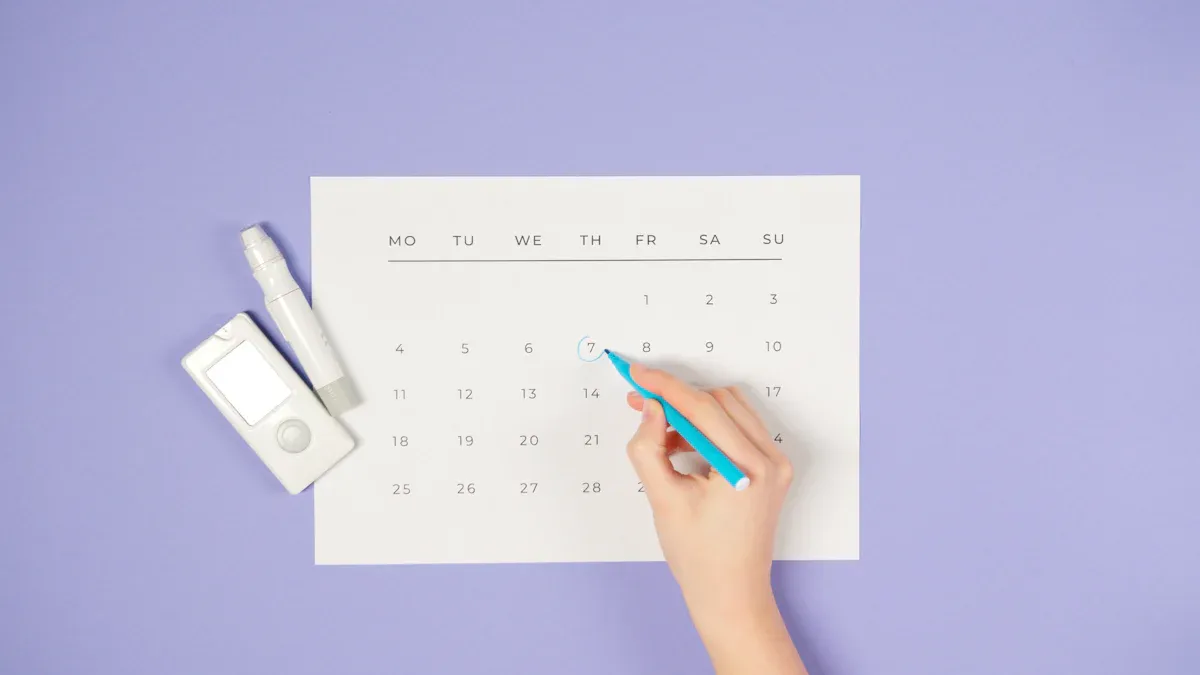
Write the opening date on the package to help with your expiration date check.
Trust your senses. If the product smells odd, changes color, or feels different, it may be time to throw it away.
By learning to read expiry dates expiration dates best by dates, you can keep your routine safe and effective.
Skincare Expiration Dates and Shelf Life
Unopened vs. Opened Products
You may ask how long skincare lasts before and after opening. Unopened products last longer because air and germs have not touched them. When you open a bottle or jar, it starts to break down faster. Air and germs can get inside and make the product spoil.
Here is a table that shows how shelf life changes:
Product Type |
Unopened Shelf Life |
Opened Shelf Life |
|---|---|---|
General Products |
Use within 1 year |
|
Lotions |
Use within 1 year |
|
Organic Lotions |
Up to 2 years |
Use within 1 year |
Sealed Products |
3 to 5 years |
Use within 1 year |
Always look for the PAO symbol or a printed date on the package. If you do not see a date, use the table to help you decide. After you open a product, use it within the time listed for opened items.
Shelf Life by Product Type
Different skincare types last for different times. Some products last longer because of their ingredients and how you use them. Here is a table with average shelf lives for common products:
Product |
Average Shelf Life |
Reason |
|---|---|---|
Cleansers |
Mild ingredients and surfactants do not break down fast. |
|
Serums |
6 to 12 months |
Active ingredients break down when exposed to air and light. |
Mascara |
3 to 6 months |
Wet formula and touching eyes can cause germs. |
Powders |
2 to 3 years |
Dry formula makes it hard for bacteria to grow. |
Sunscreen |
1 to 3 years |
Active ingredients lose strength over time. |
Pay close attention to skincare expiration dates for serums and mascara. These products can spoil faster because their ingredients do not last as long. Always use clean hands or tools to keep your products fresh.
Preservatives help keep skincare safe by stopping germs from growing. They kill or slow down bacteria and mold. Good preservatives do not change how your product looks or smells. They keep the pH balanced and do not react with other ingredients. This helps products last longer and stay safe for you.
Storage and Its Impact on Skincare Expiration Dates
How you store skincare matters for how long it lasts. Keep products in a cool, dark place. A cabinet or drawer away from sunlight and heat is best. Sunlight and heat can break down active ingredients and make products weaker.
Tip: Store skincare in a dry place. Bathrooms get hot and humid, which can shorten shelf life.
Temperature changes can hurt your skincare. If products get too hot or cold, ingredients can break down or separate. This makes them less safe and less effective. Light, heat, and humidity speed up ingredient breakdown. Always close lids tightly and do not leave products open.
Even airtight containers cannot keep out all air. Preservatives protect skincare from germs and spoilage. They help keep products safe, but you still need to store them right to get the most out of them.
If you follow these tips, your skincare will last longer and stay safe. Always check skincare expiration dates and store products the right way to protect your skin and your money.
Signs a Beauty Product Has Expired
Changes in Texture, Color, or Smell
You can tell if a product is expired by looking at it, touching it, or smelling it. Some common signs are easy to spot.
The product smells weird or bad. If you smell something sharp or rotten, the product may be spoiled.
The color or smell changes. If a cream turns yellow or a serum gets darker, it might not be safe anymore.
The texture feels different. Products can get thick, clumpy, too runny, or even hard.
Sometimes, you might see mold. Mold can look like black, green, or blue spots. If you see mold, throw the product away right away. A change in color or smell usually means the product is old. But some ingredients, like Vitamin C, can change color and still be safe. Always check for other signs before you decide to keep or toss a product.
Skin Reactions or Ineffectiveness
Your skin can show signs when you use expired products. You might feel stinging, see redness, or get bumps. Expired products can also cause breakouts or infections, especially near your eyes. The table below shows what can happen to your skin:
Skin Reaction Type |
Description |
|---|---|
Irritation |
Stinging, redness, and bumps can happen with expired products. |
Breakouts |
Germs can cause acne-like breakouts. |
Infections |
Bad germs can cause serious infections, especially near your eyes. |
Perioral Dermatitis |
This is a more serious problem that can come from using old products. |
You might also notice your favorite product does not work as well. The important ingredients get weaker over time. Preservatives can stop working, so you might get more irritation or allergies. If you see less effect or more irritation, the product is probably expired.
When to Discard Beauty Products
You should always check expiration dates and look for signs that a product is expired. Experts say to get new mascara every three months. Use sunscreen before the date on the package. Other products, like foundation or lipstick, have their own shelf lives. The chart below shows how long you should keep common items:
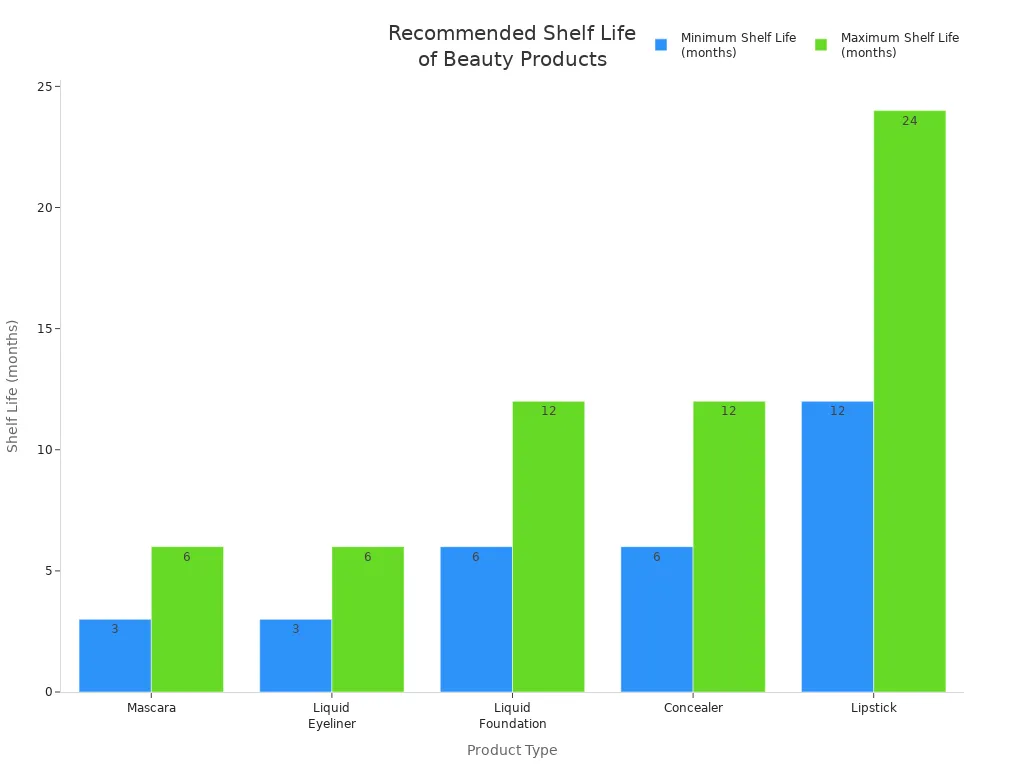
If you see a change in texture, color, smell, or if your skin gets irritated, throw the product away. Watching for these signs helps you keep your skin healthy and safe.
Maximizing Product Longevity
Proper Storage Tips
You can make your skincare last longer by storing it right. Put your products in a cool, dark spot. This keeps them safe from sunlight and heat. Sunlight and heat can ruin active ingredients. Your skincare might not work well if it gets too hot. Use pump or dropper bottles for serums. This helps keep air out. Natural masques stay fresh if you seal them tight. Keep them in a dry place. Put natural serums and eye creams in the fridge. This helps them last longer. Organize your skincare by how often you use it. Label expiration dates on each item. Always check expiration dates, especially for organic skincare. Organic products do not last as long.
Use pump or dropper bottles for serums
Keep humidity low
Refrigerate natural products when possible
Tip: Do not keep skincare in the bathroom. Bathrooms are hot and wet. This can make products spoil faster.
Good Hygiene Practices
Good hygiene keeps your skincare clean and safe. Wash your hands before you use skincare. Use a clean spatula or scoop for jars. Do not use your fingers. This stops germs from getting in. Close containers tight after you use them. Clean makeup brushes and sponges every week. Use mild soap and warm water. Never share skincare or makeup with others. Sharing can spread germs.
Use clean utensils for jars
Close containers tightly
Clean surfaces and tools regularly
Tracking Opening Dates
Write down the date you open each product. This helps you know when to get a new one. The PAO symbol shows how long a product is good after opening. Check opening dates often. This helps you avoid using expired skincare. Expired products can hurt your skin. Marking opening dates is easy. It helps you keep track of your skincare. You will waste less and keep your skin safe.
Note: Marking opening dates helps you remember when to replace products. It is a simple way to keep your skincare fresh and safe.
You keep your skin safe when you know about expiry dates, expiration dates, and best by dates. Always look at your products for any changes in color, smell, or texture. Put them in a cool and dry spot.
Old products can make your skin itchy or give you an infection.
Storing products well and staying clean helps them work and keeps you safe.
FAQ
How can you tell if a product is expired if there is no date?
Trust your senses. Look for changes in color, smell, or texture. If you notice anything unusual, you should stop using the product.
Is it safe to use skincare after the expiration date?
You should not use skincare after the expiration date. The product may not work well. It could also cause skin irritation or infection.
What does the PAO symbol mean on my product?
The PAO symbol shows how many months you can use the product after opening. For example, "12M" means you should use it within 12 months.